Our terroirs
Burgundy is unique; the terroir brings out the characteristics of the varietal which are expressed through nuances that depend on the region, soil, subsoil, exposure, and viticultural techniques used.
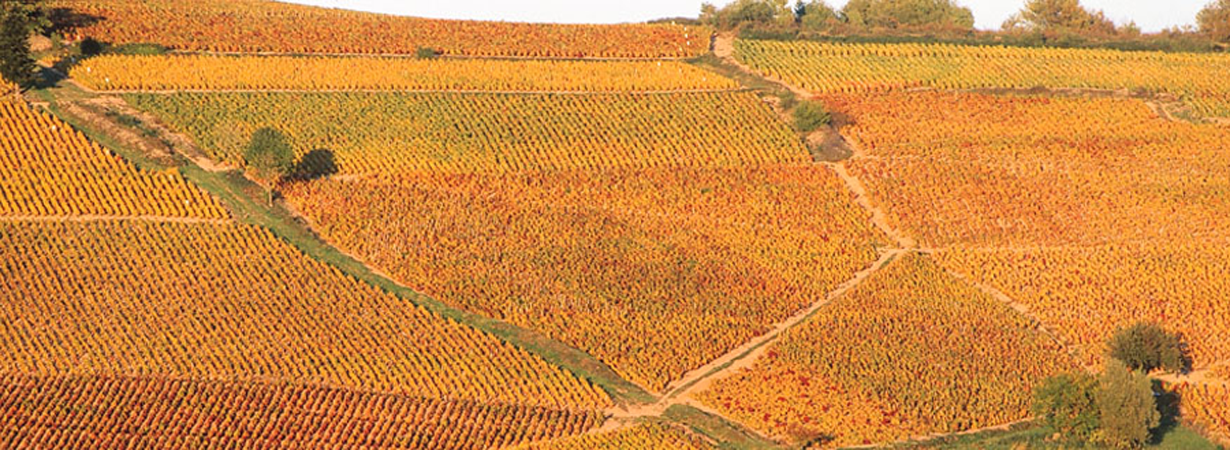
Burgundy’s vineyards are composed of a mosaic of single vineyards, known as “climats”, which determine the hierarchy of the wines within each appellation.
Burgundy’s diversity and richness can be found in its 6 great winegrowing areas. These are, from north to south: Chablis, the Côte de Nuits, the Côte de Beaune, the Côte Châlonnaise, the Mâconnais, and the Beaujolais.
The hierarchy of Burgundy wines is simple and is divided into 4 levels of appellation that are applied to both red and white wines, classifying them according to their quality. Think of a pyramid. The base is made up of the regional appellation “Bourgogne” (53% of production), then come the communal or “Villages” appellations (30% of production). Moving up another notch, we find the communal appellations generally followed by the name of the “climat” (single vineyard) classified as “Premier Cru” (15% of production), and finally, at the top of the pyramid are the “Grands Crus” (2% of production).
|